Showing posts with label Louisiana Purchase. Show all posts

Sunday, August 23, 2009

The Rights, Advantages and Immunities of Citizens of the United States


Section 1 of the Fourteenth Amendment includes the so-called Privileges or Immunities Clause, which provides that “No State shall make or enforce any law which shall abridge the privileges or immunities of citizens of the United States.” Most scholars have come to agree that, if the Fourteenth Amendment applies the Bill of Rights to the States, it was the Privileges or Immunities Clause that was supposed to do the job. This, in turn, has set off a scholarly search for the meaning of and antecedents to the mysterious phrase, “the privileges or immunities of citizens of the United States.”

Most legal historians have, not surprisingly, pointed to a clause in Article IV, Section 2 that contains similar language. The Privileges and Immunities Clause provides that “The Citizens of each State shall be entitled to all Privileges and Immunities of Citizens in the several States.”

In his important new article, The Origins of the Privileges or Immunities Clause, Part I: “Privileges and Immunities” as an Antebellum Term of Art, constitutional historian Kurt T. Lash identifies a different source. It turns out that treaties and treaty-related documents in the period between the founding and the Civil War repeatedly referred to the rights, privileges and immunities “of citizens of the United States.” What is more, we have contemporary explanations of what the terms were understood to mean.

Since my purpose here is to whet your appetite, not rehash Prof. Lash's entire article, I want to cut to the chase and focus on one example to which Prof. Lash points. Article III of the Louisiana Purchase Treaty provided that inhabitants of acquired territory (which included Missouri) would enjoy “all these rights, advantages and immunities of citizens of the United States”:
The inhabitants of the ceded territory shall be incorporated in the Union of the United States and admitted as soon as possible according to the principles of the federal Constitution to the enjoyment of all these rights, advantages and immunities of citizens of the United States, and in the mean time they shall be maintained and protected in the free enjoyment of their liberty, property and the Religion which they profess.

During the Missouri Crisis of 1819-1821, this provision became the focus of discussion and argument. Anti-restrictionists (that is, those who contended that Missouri should be admitted as a state without restriction as to the form of its state constitution) maintained that restriction violated Article III.

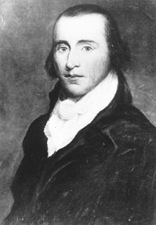
Among those who denied the charge was Daniel Webster, who in December 1819 authored A Memorial to the Congress of the United States, on the subject of restraining the increase of Slavery in New States to be admitted into the Union.

In the Memorial, Webster countered the Article III argument by drawing a distinction between “the rights, advantages and immunities” granted under state law and those “of citizens of the United States.” The constitution and laws of a particular state might or might not grant all sorts of rights; but “the rights, advantages and immunities of citizens of the United States” were those set forth in the federal Constitution and common to all:
The rights, advantages, and immunities here spoken of [in Article III], must, from the very force of the terms of the clause, be such as are recognized or communicated by the Constitution of the United States; such as are common to all citizens, and are uniform throughout the United States. The clause cannot be referred to rights, advantages, and immunities derived exclusively from the State Government, for these do not depend upon the Federal Constitution. Besides, it would be impossible that all the rights, advantages, and immunities of citizens of the different States, could be at the same time enjoyed by the same persons. These rights are different in different States; a right exists in one State which is denied in others, or is repugnant to other rights enjoyed in others. In some of the States, a freeholder alone is entitled to vote in elections; in some a qualification of personal property is sufficient; and in others, age and freedom are the sole qualifications of electors. In some States, no citizen is permitted to hold slaves: in others, he possesses that power absolutely; in others, it is limited.

Webster then went on to describe some of “the rights derived under the Federal Constitution”:
The obvious meaning, therefore, of the clause is, that the rights derived under the Federal Constitution, shall be enjoyed by the inhabitant of Louisiana in the same manner as by the citizens of other States. The United States, by the Constitution, are bound to guarantee to every State in the Union a republican form of government; and the inhabitants of Louisiana are entitled, when a State, to this guarantee. Each State has a right to two Senators, and to Representatives according to a certain enumeration of population, pointed out in the Constitution. The inhabitants of Louisiana, upon their admission into the Union, are also entitled to these privileges.

Saturday, November 24, 2007

Was The Louisiana Purchase Unconstitutional? VI


Let's look at a few other considerations. In this post, I'll review the relevant "legislative history" of the Constitutional Convention. Current original understanding theory holds that the unexpressed and (at the time of ratification) unknown intent of the members of the Constitutional Convention is irrelevant. Still, it's fun to investigate.

Ironically, the original version of the Clause contained language that provided more support for the suggestion that new states could be formed only from then-existing territory of the United States.

The admission of additional states was raised as an issue at the very outset of the constitutional convention. On Tuesday May 29, 1787, Edmund Randolph of Virginia presented, on behalf of the Virginia delegation, a series of 15 resolutions commonly known as the Virginia Plan. The 10th resolution addressed the admission of new states:
10. Resolvd. that provision ought to be made for the admission of States lawfully arising within the limits of the United States, whether from a voluntary junction of Government & Territory or otherwise, with the consent of a number of voices in the National legislature less than the whole.

So far as I can tell, it is impossible to be sure whether the phrase “within the limits of the United States” was intended to imply the limits of the United States as they then existed in 1787. But at least the phrase lends itself to that possibility.

On Tuesday June 5, 1787, the 10th resolution came up for discussion before the convention sitting as a committee of the whole. The discussion was brief:
Resolution 10 was agreed to-viz-that provision ought to be made for the admission of States lawfully arising within the limits of the U. States, whether from a voluntary junction of Government & territory, or otherwise, with the consent of a number of voices in the National Legislature less than the whole.

On Thursday July 26, 1787, the Convention referred a series of resolutions to the Committee of Detail. The resolution concerning new states, then numbered XVII, was at that point unchanged:
XVII. RESOLVED, That provision ought to be made for the admission of states lawfully arising within the limits of the United States, whether from a voluntary junction of government and territory, or otherwise, with the consent of a number of voices in the national legislature less than the whole.

On Tuesday August 6, 1787, John Rutledge of South Carolina delivered the Report of the Committee of Detail. The Committee’s version of Resolution XVII, now labeled Article XVII, continued to include the “within the limits of the United States” language:
New States lawfully constituted or established within the limits of the United States may be admitted, by the Legislature, into this Government; but to such admission the consent of two thirds of the members present in each House shall be necessary. If a new State shall arise within the limits of any of the present States, the consent of the Legislatures of such States shall be also necessary to its admission. If the admission be consented to, the new States shall be admitted on the same terms with the original States. But the Legislature may make conditions with the new States, concerning the public debt which shall be then subsisting.

On Wednesday August 29, the Committee of Detail’s draft of Article XVII came up for review before the convention. For reasons that Madison does not explain, the convention voted unanimously to replace the first clause with new language that did not include the phrase “within the limits.” The relevant portion of Madison’s notes reads as follows in its entirety:
Mr. Govr. MORRIS moved the following proposition as a substitute for the XVII art:

"New States may be admitted by the Legislature into this Union: but no new State shall be erected within the limits of any of the present States, without the consent of the Legislature of such State, as well as of the Genl. Legislature"

The first part to Union inclusive [that is, the first clause, “New States may be admitted by the Legislature into this Union”] was agreed to nem: con: [without dissent].

Although there was a good deal of discussion about the second part of the sentence – the circumstances under which new states could be created out of present states, in whole or in part – the initial clause remained the same.

On Saturday September 15, the delegates reviewed the constitution and considered final amendments. The Section concerning the admission of new states had already reached its final form:
Art. IV. Sect 3. "New States may be admitted by the Congress into this Union: but no new State shall be formed or erected within the jurisdiction of any other State; nor any State be formed by the junction of two or more States, or parts of States, without the consent of the Legislatures of the States concerned as well as of the Congs"

Tuesday, November 20, 2007

Was The Louisiana Purchase Unconstitutional? V


The second objection – that the United States could not create a new state (or states) from the Louisiana Purchase territory – strikes me as equally odd.

Article IV, Section 3, Clause 1 provides that "New States may be admitted by the Congress into this Union . . .." It contains a qualification, but that qualification relates to the creation of new states out of old ones: ". . . but no new States shall be formed or erected within the Jurisdiction of any other State; nor any State be formed by the Junction of two or more States, or parts of States, without the Consent of the Legislatures of the States concerned as well as of the Congress."

Once again, it seems to me that the language is determinative. Nothing in the language would lead the ratifiers to think that new states could be created only out of the United States and their territory as they existed in 1787 - 89.

Nonetheless, in an attempt to spin this out a bit more, I look at a couple of other considerations in a future post or two.

Sunday, November 18, 2007

Was The Louisiana Purchase Unconstitutional? IV

After all of this build up, the Constitutional analysis is a let down – with all due respect to Thomas Jefferson, these are not close questions. Let’s plow ahead anyway, starting with Representative Nicholson’s first issue: did the Constitution bar the United States from acquiring, by treaty, sovereignty over new territory, i.e., territory that it did not possess in 1789?

The proponents of unconstitutionality apparently grounded their conclusion in the idea that the “United States” referred to in the Constitution was and could only be the physical entity as it existed in 1789. New Hampshire Federalist Senator William Plumer, for example, apparently believed that the reference in the Preamble "to ourselves and our Posterity" suggested that the Constitution was limited to the geographic confines that existed upon ratification:

The constitution of the United States was formed for the express purpose of governing the people who then & thereafter should live within the limits of the United States as then known & established. It never contemplated the accession of a foreign people, or the extension of territory.

As David Currie has noted, "If that was the best opponents of acquisition could do, it was pretty poor." Article II, Section 2 says simply that the President "shall have Power, by and with the Advice and Consent of the Senate, to make Treaties, provided two thirds of the Senators present concur." Why isn’t that the beginning and end of the matter? Transfer of territory has been a common subject of treaties for thousands of years. Nothing in Section 2 suggests that that subject is somehow carved out from the treaty power. To the contrary, the language is general and admits of no exceptions.

Saturday, November 17, 2007

Was The Louisiana Purchase Unconstitutional? III


In my last post on the topic, I quoted Representative Joseph Hopper Nicholson to the effect that opponents of the Louisiana Purchase were in fact raising two separate issues. First, was the United States authorized under the Constitution to assume sovereignty over, and take possession of, new territory? And second (and assuming a positive answer to the first question), was the United States authorized under the Constitution to admit that newly-acquired territory into the Union "upon an equal footing with the other States" -- i.e., as a state itself.

Let me turn, then, to the treaty between the United States and the French Republic. My purpose is not to summarize the entire treaty, but rather to focus only on those portions that bear directly on the issues identified by Representative Nicholson.

For our purposes, the Treaty is quite simple.

As you probably know, in 1803, some question existed as to whether Spain or France owned Louisiana. In October 1800, Spain and France had entered into a treaty by which Spain “promise[d] and engage[d] . . . to cede to the French Republic six months after the full and entire execution of the conditions and Stipulations herein relative to his Royal Highness the Duke of Parma, the Colony or Province of Louisiana.” However, Spain had never officially transferred the colony to France, and France had not actually taken possession of it. The first order of business, therefore, was to establish that France had marketable title to convey.

The parties accomplished this in Article I of the Louisiana Purchase Treaty. That Article quoted from the earlier treaty and simply asserted that “in pursuance of the [French-Spanish] Treaty . . . the French Republic has incontestable title to the domain and to the possession of the said Territory.”

After establishing title, Article I then conveyed it to the United States in a single sentence. In effect, the transfer was by quitclaim deed: although France maintained it had “incontestable title,” the United States got whatever title it was that France possessed, to the extent that France possessed it:

The First Consul of the French Republic desiring to give to the United States a strong proof of his friendship doth hereby cede to the United States in the name of the French Republic for ever and in full Sovereignty the said territory with all its rights and appurtenances as fully and in the Same manner as they have been acquired by the French Republic in virtue of the above mentioned Treaty concluded with his Catholic Majesty [the King of Spain].

The other Article that figured in later constitutional doubts was Article III. That Article dealt with the political rights and status of the inhabitants of the territory, and the status of the territory within the United States. The Article stated in its entirety:
The inhabitants of the ceded territory shall be incorporated in the Union of the United States and admitted as soon as possible according to the principles of the federal Constitution to the enjoyment of all these rights, advantages and immunities of citizens of the United States, and in the mean time they shall be maintained and protected in the free enjoyment of their liberty, property and the Religion which they profess.

Was this, in effect, a promise that the territory would be admitted to statehood? Although it does not say that in so many words, that is certainly a fair way – and perhaps the only way – to read it. It certainly seems that Representative Nicholson's breakdown of the issues corresponds nicely to Articles I and III.

In the next post, we’ll start looking at the relevant provisions of the Constitution.

Thursday, November 15, 2007

Was The Louisiana Purchase Unconstitutional? II

One member of the House of Representatives correctly noted that those who expressed doubts about the constitutionality of the treaty were confusing two different points.

During the debates over the treaty, Representative Joseph Hopper Nicholson of Maryland asserted that there were two separate constitutional issues, "though gentlemen had very ingeniously blended them, and considered them as one." Nicholson identified the first issue as "[w]hether the United States, as a sovereign and independent empire, had a right to acquire territory." The second, he said, was "whether they [the United States] could admit that territory into the Union, upon an equal footing with the other States."

Putting aside whether the objections, so framed, have any merit, at least they make sense: I can understand what they are.

Let's turn now to the treaty itself to understand the sources of the concerns.

Wednesday, November 14, 2007

Was The Louisiana Purchase Unconstitutional? I

I have heard for years that Thomas Jefferson (and others at the time) believed that the Louisiana Purchase was unconstitutional, or at least that he had serious doubts about its constitutionality. I've never understood the issues. What were the objections? Were they well founded? Let take a look.

To begin with. let's try to understand the objections. Here is an excerpt from a letter that Jefferson wrote to Senator John Breckinridge (who should not be confused with this John Breckinridge) on August 3, 1803:
This treaty must of course be laid before both Houses, because both have important functions to exercise respecting it. They, I presume, will see their duty to their country in ratifying & paying for it, so as to secure a good which would otherwise probably be never again in their power. But I suppose they must then appeal to the nation for an additional article to the Constitution, approving & confirming an act which the nation had not previously authorized. The constitution has made no provision for our holding foreign territory, still less for incorporating foreign nations into our Union.

I don't know about you, but Jefferson's objection seems totally opaque to me. Was the United States going to be "holding foreign territory"? I didn't think so. The territory, once purchased, would belong to the United States. Would the US be "incorporating foreign nations into our Union"? Well, only in the sense that the U.S. was acquiring by treaty territory previously claimed by another country. But so what? Did Jefferson view these as different objections? Or were they two ways of phrasing the same thing? I'll explore these and other mysteries in future posts.
Related Posts with Thumbnails