Showing posts with label new york court of appeals. Show all posts

Friday, December 26, 2008

Judith S. Kaye


At Concurring Opinions, Professor Lawrence Cunningham has a fine tribute to Judith Smith Kaye, who is retiring as Chief Judge of the New York Court of Appeals, focusing on an early specific performance case, Van Wagner Advertising (1986).

Judge Kaye had been a civil litigator at Olwine Connelly in Manhattan before she joined the Court. For various reasons, principally finality, relatively few civil cases reached the Court. It was for this reason that she particularly enjoyed digging into a good contracts case or complex civil litigation.

Extra credit question followers of Judge Kaye's work: which portion or portions, if any, of the opinion in Citibank v. Plapinger (1985) might Judge Kaye have contributed?

Sunday, April 01, 2007

Lemmon v. People XIII: What If . . .

Earlier this year, I published a number of posts concerning the New York Court of Appeals decision in Lemmon v. People (1860), in which the court held that even the transitory presence of a slave in the State of New York made the slave free. (You can find those posts by clicking on the "Lemmon v. People" link at the right.) At the time, Republicans expressed concern that the Supreme Court of the United States might use the case, or another like it, as a vehicle to extend the Dred Scott decision by holding that free states could not constitutionally bar or free slaves brought into those states by their masters.

The argument in Lemmon was held before the New York Court of Appeals on January 24, 1860. The next day, the New York Times reported on the arguments, in detail. Those arguments included the slaveowner's (really Virginia's) arguments that New York laws purporting to make free slaves who entered the state even on a transitory basis violated the United States Constitution.

Abraham Lincoln delivered his Cooper Union speech just one month later, on February 27, 1860. Although he did not specifically mention Lemmon, he may be have been referring to the case in the following passage describing the threatened "overthrow of our Free-State Constitutions:"
The question recurs, what will satisfy them [the southern people]? Simply this: We must not only let them alone, but we must somehow, convince them that we do let them alone. This, we know by experience, is no easy task. We have been so trying to convince them from the very beginning of our organization, but with no success. In all our platforms and speeches we have constantly protested our purpose to let them alone; but this has had no tendency to convince them. Alike unavailing to convince them, is the fact that they have never detected a man of us in any attempt to disturb them.

These natural, and apparently adequate means all failing, what will convince them? This, and this only: cease to call slavery wrong, and join them in calling it right. And this must be done thoroughly - done in acts as well as in words. Silence will not be tolerated - we must place ourselves avowedly with them. Senator Douglas' new sedition law must be enacted and enforced, suppressing all declarations that slavery is wrong, whether made in politics, in presses, in pulpits, or in private. We must arrest and return their fugitive slaves with greedy pleasure. We must pull down our Free State constitutions. The whole atmosphere must be disinfected from all taint of opposition to slavery, before they will cease to believe that all their troubles proceed from us.

I am quite aware they do not state their case precisely in this way. Most of them would probably say to us, "Let us alone, do nothing to us, and say what you please about slavery." But we do let them alone - have never disturbed them - so that, after all, it is what we say, which dissatisfies them. They will continue to accuse us of doing, until we cease saying.

I am also aware they have not, as yet, in terms, demanded the overthrow of our Free-State Constitutions. Yet those Constitutions declare the wrong of slavery, with more solemn emphasis, than do all other sayings against it; and when all these other sayings shall have been silenced, the overthrow of these Constitutions will be demanded, and nothing be left to resist the demand. It is nothing to the contrary, that they do not demand the whole of this just now. Demanding what they do, and for the reason they do, they can voluntarily stop nowhere short of this consummation. Holding, as they do, that slavery is morally right, and socially elevating, they cannot cease to demand a full national recognition of it, as a legal right, and a social blessing.

(Emphasis added)

As it turned out, the United States Supreme Court did not have an opportunity to consider whether to reverse Lemmon. Even so, it's interesting to consider whether it would have, or at least might have, done so.

The biggest problem in making such a hypothetical prediction lies in the Supreme Court itself. Chief Justice Taney's decision in Dred Scott was profoundly dishonest from an intellectual standpoint. Taney showed himself prepared to distort history and advance ludicrous arguments in order to reach a desired result.

It's therefore necessary, I think, to conduct two inquiries, rather than one. First, what would an intellectually honest Supreme Court have done with Lemmon? Second, assuming an intense desire to reach a particular result, could the Supreme Court have stretched to reach that result and, if so, how might it have done so?

In order to avoid too long a post, I will simply set the stage. In order to reverse Lemmon, the Supreme Court would have had to clear several huge hurdles. The largest was that the states retained all sovereign powers except to the extent that they had ceded particular powers to the federal government.

It was going to be particularly difficult to argue that states had ceded their powers over the status of slavery within their borders. In Prigg v. Pennsylvania (1842), Justice Story had emphasized that regulation of the status of slavery was clearly a state function. It was precisely for this reason, he argued, that the Constitution included the Fugitive Slave Clause. But for the existence of that clause, a free state could declare runaway slaves free, leaving their owners and the slave states without remedy:
By the general law of nations, no nation is bound to recognise the state of slavery, as to foreign slaves found within its territorial dominions, when it is in opposition to its own policy and institutions, in favor of the subjects of other nations where slavery is recognised. If it does it, it is as a matter of comity, and not as a matter of international right. The state of slavery is deemed to be a mere municipal regulation, founded upon and limited to the range of the territorial laws. This was fully recognised in Somerset's Case, . . . decided before the American revolution. It is manifest, from this consideration, that if the constitution had not contained this clause [the Fugitive Slave Clause], every non-slave-holding state in the Union would have been at liberty to have declared free all runaway slaves coming within its limits, and to have given them entire immunity and protection against the claims of their masters; a course which would have created the most bitter animosities, and engendered perpetual strife between the different states. The clause was, therefore, of the last importance to the safety and security of the southern states, and could not have been surrendered by them, without endangering their whole property in slaves. The clause was accordingly adopted into the constitution, by the unanimous consent of the framers of it; a proof at once of its intrinsic and practical necessity.

Monday, January 08, 2007

Lemmon v. People XII

It's been a while. As you may recall, dissenting New York Court of Appeals Judge Thomas W. Clerke had concluded that, pursuant to the Constitution, "the citizens of any one State have a right of passage through the territory of another, peaceably, for business or pleasure; and the latter acquires no right over such person or his property."

He then turned to the question whether slaves were "property" under the rule he laid out. He answered in the affirmative, essentially arguing that the Constitution recognized slaves as property:

"[C]an any one State insist, under the federal compact, in reference to the rights of the citizens of any other State, that there is no such thing as the right of such citizens, in their own States, to the service and labor of any person. This is property; and whether the person is held to service and labor for a limited period, or for life, it matters not; it is still property -- recognized as an existing institution by the people who framed the present Constitution . . .."

Judge Clerke conceded that slavery was "a local institution," but found this no impediment to his conclusion:

"And what was the result of those convictions and deliberations [at the Constitutional Convention]? Undoubtedly, that while slavery should be deemed a local institution, depending upon the power of each State to determine what persons should share in the civil and political rights of the community the right is fully recognized in the Constitution, that any of the States may continue and allow the right of property in the labor and service of slaves."

Finally, Judge Clerke rejected the suggestion that the slaveholders' right was "founded merely on comity." The right to passage might be granted voluntarily under international law, but the Consititution cemented the right:

"The right yielded by what is termed comity under the law of nations, ripens, in necessary accordance with the declared purpose and tenor of the Constitution of the United States, into a conventional obligation, essential to its contemplated and thorough operation as an instrument of federative and national government."

Thursday, December 28, 2006

Lemmon v. People XI

Having established his foundation, Judge Clerke began building on it by asking a rhetorical question:

"Is it consistent with this purpose of perfect union, and perfect and unrestricted intercourse, that property which the citizen of one State brings into another State, for the purpose of passing through it to a State where he intends to take up his residence, shall be confiscated in the State through which he is passing, or shall be declared to be no property, and liberated from his control?"

20 N.Y. at 636.

In order to answer the question, Judge Clerke first turned to the "the law of nations" for support. Under that law, he asserted, "the citizens of one government have a right of passage through the territory of another, peaceably, for business or pleasure; and the latter acquires no right over such person or his property." Moreover, foreign nations yield this privilege to each other "without any express compact. It is a principle of the unwritten law of nations." Id.

As you may guess, Judge Clerke then concluded that, if sovereign nations, unbound by compact, granted this privilege to one another, a fortiori "this principle is much more imperative on the several States." "For it can be clearly deduced, as we have seen, from the compact on which their union is based." Id.

Judge Clerke has one more hurdle to pass: are slaves "property," or is that term limited to "merchandise or things?" And who defines the term? We will deal with these issues in our next installment.

Wednesday, December 27, 2006

Lemmon v. People X

Judge Wright, ironically, voted in favor of freeing the eight slaves by insisting that the Constitution strictly limited the powers of the federal government to those specifically enumerated. Conversely, Judge Clerke voted to reverse by looking to the broad purposes of the Constitution as he perceived them rather than focusing on specific clauses or powers. In many ways, Judge Clerke's opinion is a remarkably "loose" and “liberal” one.

Judge Clerke agreed that the New York statute applied to the situation and, but for constitutional considerations, required freeing the slaves. “But it is a question of much greater difficulty, whether the Legislature had the constitutional power to do so.”

The Constitution, Judge Clerke asserted, “not only establishes a confederacy of States, but also, in regard to its most material functions, it gives this confederacy the character of a homogeneous national government.” The framers “evidently designed to incorporate this people into one nation, not only in its character as a member of the great family of nations, but also in the internal, moral, social and political effect of the Union upon the people themselves.”

From this, Judge Clerke in effect derived what we would today call the right to travel:

“It was essential to this grand design that there should be as free and as uninterrupted an intercommunication between the inhabitants and citizens of the different states, as between the inhabitants and citizens of the same State.”

20 N.Y. at 634.

In the remainder of the paragraph, Judge Clerke repeatedly invoked the “more perfect union” language of the Preamble and listed many of the provisions of the Constitution (including the Interstate Commerce Clause and the Privileges and Immunities Clause) that were designed “better to secure and perpetuate mutual friendship and intercourse among the people of the different States.” Based on this review, he concluded as follows:

“Most assuredly, the people who adopted the present Constitution did not intend that the intercourse between the people of the different States should be more limited or restricted than the States, in their corporate capacity, provided in the Articles of Confederation. On the contrary, they contemplated, as we have seen, a more perfect union, and a more perfect and unrestricted intercourse; and they amply secured it by the provisions to which I have referred.”

20 N.Y. at 635-36.

In the next post, we will see how Judge Clerke uses this foundation.

Tuesday, December 26, 2006

Lemmon v. People IX

I have reviewed, more or less completely as the case may be, the majority opinions of Judges Denio and Wright and the brief dissents of Chief Judge Comstock and Judge Selden.

The third dissenter, and the only judge who wrote a dissent of any length, was Thomas W. Clerke. Judge Clerke bears a very odd, double role in the case. He seems to have been a Justice of the Supreme Court who was sitting as a Judge of the New York Court of Appeals "ex officio." In all honesty, I'm not sure what this means in this context. Probably, he was a senior judge of the Supreme Court who sat on the Court of Appeals either by virtue of his seniority or by designation.

Judge Clerke's role was particularly unusual, first, because he a member of both the Supreme Court panel whose decision was appealed to the Court of Appeals, and of the Court of Appeals when it heard and decided that appeal. In other words, he sat in review of the decision of the panel of which he himself was a member.

Second, and even more oddly, he voted differently on the two panels. In the Supreme Court, he voted to affirm (and thus in favor of freeing the slaves). At the Court of Appeals, he voted to reverse the Supreme Court panel (including himself)!

In his Court of Appeals dissent, Judge Clerke even mentioned his change of view. He referred to "the judge who decided this case in the first instance (by whose reasoning, I may be permitted here to say, I was erroneously influenced in voting at the general term of the Supreme Court in the first district)."

20 N.Y. at 636.

Very, very strange.

Lemmon v. People VIII

I have previously noted that the opinion of Judge William B. Wright for affirmance contains several passionate denunciations of slavery. Apart from that rhetoric, the substance of the opinion is quite similar to that of Judge Denio, and I therefore will not discuss it at length.

One aspect of the opinion worth noting, however, is Judge Wright's emphasis on the limited powers of the federal government. Judge Wright almost certainly was savoring the irony as he used the doctrine of states' rights to strike a blow at the slave states in a passage such as this:

"Is there anything in the Federal Constitution to hinder the State from pursuing her own policy in regulating the social and civil condition of every description of persons that are or may come within her jurisdictional limits, or that enjoins on her the duty of maintaining the status of slavery in the case of slaves from another State of the Union voluntarily brought into her territory? It ought not to be necessary at this day to affirm the doctrine, that the Federal Constitution has no concern, nor was it designed to have, with the social basis and relations and civil conditions which obtain within the several States. The Federal Constitution is but the compact of the people of separate and independent sovereignties, yielding none of the rights pertaining to those sovereignties within their respective territorial limits, except in a few special cases."

20 N.Y. at 620-21.

Or this:

"It has never yet been doubted that the sovereign powers vested in the State governments remain intact and unimpaired, except so far as they are granted to the government of the United States; and that the latter government can claim no powers which are not granted to it by the Constitution, either expressly or by necessary implication. There is no grant of power to the Federal Government, and no provision of the Constitution from which any can be implied, over the subject of slavery in the States, except in the single case of a fugitive from service."

20 N.Y. at 628.

Finally, in the supreme irony, he invokes Dred Scott:

"Indeed, the exclusive right of the State of Missouri to determine and regulate the status of persons within her territory, was the only point in judgment in the Dred Scott case, and all beyond this was obiter [dictum, that is, extraneous discussion that was unnecessary to the decision and therefore not binding on other courts]. [Citations omitted.] Any other doctrine might prove more disasterous to the status of slavery than to that of liberty in the States, for, from the moment that it is conceded that, by the exercise of any powers granted in the Constitution to the Federal Government, it may rightly interfere in the regulation of the social and civil condition of any description of persons within the territorial limits of the respective States of the Union, it is not difficult to foresee the ultimate result."

20 N.Y. at 624-25.

This last passage seems to me to be a veiled threat to the Taney Court: if you hold that the Constitution requires a State to admit slaves, a Republican Court will in the future use your reasoning to compel southern States to abolish slavery.

Monday, December 25, 2006

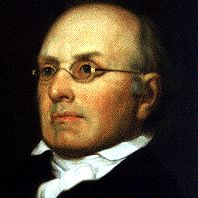
Hiram Denio


Since I'm in the middle of discussing Judge Hiram Denio's opinion in Lemmon v. People, I thought I'd provide a photo and brief bio. The following is from the New York State Courts site:

"Born in Rome, New York, on May 21, 1799, Hiram Denio commenced his legal studies at the age of 17 with Judge Joshua Hathaway of Rome and later studied in the office of Storrs & White in Whitesboro. After admission to the bar in 1821, Denio established a private practice with Wheeler Barnes in Rome. While in Rome, he was appointed County District Attorney, serving in this position from 1825 to 1834. In 1826, he relocated to Utica, forming another legal practice, this time with E.A. Wetmore. In 1834 he was appointed Circuit Judge and Vice-Chancellor for the 5th Circuit. However, four years later, he was forced to resign due to illness, returning to private practice once more. He served as Bank Commissioner from 1838 to 1840. In 1845 Judge Denio assumed the position of Reporter, publishing five volumes of the Reports before leaving the post in 1848. Appointed to fill a vacancy on the Court of Appeals in June 1853, he was reelected twice, serving as Chief Judge from 1856 through 1857. Considered one of the foremost judges in New York, he retired in 1866. Judge Denio served as trustee of Hamilton College from 1835 until his death. In 1859, Madison University (now Colgate University) awarded him the honorary degree of LLD. With William Tracy, he edited an edition of the revised statutes of New York published in 1852. Judge Denio died in Utica, New York, on November 5, 1871."

Lemmon v. People VII

Next, Judge Denio turned to the first of the objections raised by Mr. Lemmon. The New York law, was is argued, violated the Privileges and Immunities Clause, which provides that "The Citizens of each State shall be entitled to all Privileges and Immunities of Citizens in the several States."

To address this argument, Judge Denio engaged in a long and scholarly review of the history of the Clause, starting with the inclusion of its predecessor in the Articles of Confederation. He drew the conclusion that the meaning of the Clause “is, that in a given State, every citizen of every of other State shall have the same privileges and immunities – that is, the same rights – which the citizens of that State shall possess.” 20 N.Y. at 608. On the other hand, the Clause did not grant to citizens of other States more rights than the State granted to its own citizens. “But where the laws of the several States differ, a citizen of one State asserting rights in another, must claim them according to the laws of the last mentioned State, not according to those which obtain in his own.” 20 N.Y. at 609.

In this context, Judge Denio denied that the Clause had anything “to do with the doctrine of international comity.” Under that doctrine, one State may defer to the laws of another, but it depends in part upon “the presumed assent of the legislative authority of the particular State in which the right is claimed; and an express denial of the right by that authority is decisive against the claim.” 20 N.Y. at 609. Here, there was such "an express denial" because the statutory history demonstrated that the New York legislature had already decisively spoken.

My reading of the decision leads me to conclude that Judge Denio was an extremely smart and clever lawyer. The discussion of comity together with the Privileges and Immunities Clause is at first somewhat surprising, because the doctrine of comity does not depend on the Clause. It is a flexible, quasi-equitable doctrine that typically comes into play in international relations (as Judge Denio concedes), where the Clause does not exist.

It is in the discussion immediately following that we see why the Judge has joined the two. By eliminating the flexibility of comity, which might have permitted the Virginians to keep their slaves provided they remained in New York only temporarily, Judge Denio was able to reduce the choice-of-law question implicit in the Privileges and Immunities Clause to an either-or, all-or-nothing proposition. This leads to a classic reductio ad absurdum, which the Judge paints with relish:

“If the owner of these slaves is not in like manner bound [by New York law, as New York citizens are], it is because . . . [Mrs. Lemmon] has brought with her, or sent with them [the slaves], laws of Virginia, and is entitled to have those laws enforced in the courts, notwithstanding the mandate of our own laws to the contrary. But the position of [Mrs. Lemmon] proves too much. The privileges and immunities secured to the citizens of each State by the Constitution are not limited by time, or by the purpose for which, in a particular case, they may be desired, but are permanent and absolute in their character. Hence, if [Mrs. Lemmon] can claim exemption from the operation of the statute . . . on the ground that she is a citizen of a State where slavery is allowed, and that our courts are obliged to respect the title which those laws confer, she may retain slaves here during her pleasure; and, as one of the chief attributes of property is the power to use it, and to sell or dispose of it, I do not see how she could be debarred of these rights within our jurisdiction as long as she may choose to exercise them. She could not, perhaps, sell them to a citizen of New York, who would at all events be bound by our laws, but any other citizen of a slave State – who would equally bring with him the immunities and privileges of his own State – might lawfully traffic in the slave property.”

20 N.Y. at 609-10.

Having demonstrated that the alternative would transform New York into a slave market, Judge Denio drew the obvious conclusion:

“The answer to the claim in that aspect has already been given. It is that the owner cannot lawfully do anything which our laws do not permit to be done by one of our own citizens, and as a citizen of this State cannot bring a slave within its limits except under the condition that he shall immediately become free, the owner of those slaves could not do it without involving herself in the same consequences.”

20 N.Y. at 611.

Friday, December 22, 2006

Lemmon v. People VI

Judge Hiram Denio’s opinion in favor of affirmance -- that is, in favor of declaring the eight slaves free -- lacks the passionate denunciations of slavery we have seen in Justice Wright’s. It is a model of dispassionate and impartial scholarship. Nonetheless – and I may be imagining it – I picture Judge Denio silently smiling from time to time as he writes his opinion.

Justice Denio began his constitutional discussion by arguing that the Fugitive Slave Clause supported the constitutionality of the statute and thus the eight slaves' freedom. The Clause, the judge deduced, supported the conclusion that “the authors of the Constitution [assumed] that the fact of a federative Union would not of itself create a duty on the part of the States which should abolish slavery to respect the rights of the owners of slaves escaping thence from the States where it continued to exist.” 20 N.Y. at 604. In other words, the Framers implicitly recognized that a State could declare all slaves who came within its jurisdiction free, unless the Constitution provided otherwise. Despite this assumption, the Framers constrained free States only as to escaped slaves, not as to slaves whose masters brought them voluntarily into the jurisdiction:

“Reading the provision for the rendition of fugitive slaves, in the light which these considerations afford, it is impossible not to perceive that the [Constitutional] Convention assumed the general principle to be that the escape of a slave from a State in which he was lawfully held to service into one which had abolished slavery would ipso facto transform him into a free man. This was recognized as the legal consequence of a slave going into a State where slavery did not exist, even though it were without the consent and against the will of the owner. A fortiori he would be free if the master voluntarily brought him into a free State for any purpose of his own. But the provision in the Constitution extended no further than the case of fugitives.”

20 N.Y. at 606.

Sitting alone in his chambers, Judge Denio puts down his pen and reviews his handiwork. He leans back in his chair and smiles, savoring the irony. Round one to freedom.
Related Posts with Thumbnails