Showing posts with label Abram D. Smith. Show all posts

Thursday, May 24, 2007

Groves v. Slaughter VIII: A "power higher and deeper than the constitution"

Only seven Supreme Court justices participated in the decision in Groves v. Slaughter. (One justice was “indisposed” and another “died before the case was decided.")

The first concurrence, by Justice John McLean, is a textbook example of Commerce Clause incoherence.

After admitting that his constitutional ruminations were “not necessary to decision of the case," Justice McLean began his discussion of the substance by forcefully asserting “that the power to regulate commerce is exclusively vested in congress, and that no part of it can be exercised by a state.” This was so even if the federal government had not exercised its power as to a particular subject. A contrary rule “would be as fatal to the spirit of the constitution, as it is opposed to its letter.” What letter, Justice McLean declined to identify.

Next, Justice McLean sketched out what sounded like a narrow reading of the police powers exception. A state may pass laws to guard the health and protect the rights of its citizens, “[b]ut these laws must not be extended so as to come in conflict with a power expressly given to the federal government.”

Having laid out a super-nationalist position – federal exclusivity, narrow state police powers – Justice McLean then took half of it back. It turns out that power over international commerce may somehow be different from power over interstate commerce. The following sentences must be among the more bizarre constitutional pronouncements ever written:
The power to regulate commerce among the several states is given in the same section, and in the same language [as the power to regulate foreign commerce]. But it does not follow, that the power may be exercised to the same extent.

Got it?

The paragraphs that follow relate to slavery, and it becomes clear that Justice McLean’s odd conclusion arose from the collision of two propositions that appeared to him otherwise unreconcilable. The first proposition was that Congress had power (and therefore exclusive power) over “[t]he transportation of slaves from a foreign country.” The fact that the Constitution expressly barred Congress from prohibiting the importation of the slaves before 1808 proved that Congress otherwise had the power to do so, because “this exception to the exercise of the commercial power, may well be considered as a clear recognition of the power in the case stated.”

At the same time, Justice McLean was convinced that the states must have, and therefore did have, the power to control, or prohibit, the entry of slaves into their individual borders. But if the states had this power, the federal government could not have it, because the federal government’s commerce power was always exclusive (“If a state may admit or prohibit slaves at its discretion, this power must be in the state, and not in congress”). Strangely enough, the provision that barred the federal government from banning the importation of slaves until 1808 also supported this proposition (“Some of the states, at that time, prohibited the admission of slaves, and their right to do so was as strongly implied by this provision, as the right of other states that admitted them”).

Justice McLean reasoned that, since the federal government must have exclusive control over the international slave trade, and since the states must have exclusive control over the domestic slave trade, there must be some difference in the Constitution between the two, and it seems to have had something to do with equality among the states:
The United States are considered as a unit, in all regulations of foreign commerce. But this cannot be the case, where the regulations are to operate among the several states. The law must be equal and general in its provisions. Congress cannot pass a non-intercourse law, as among the several states; nor impose an embargo that shall affect only a part of them.

If you understand what this means, or why it supports Justice McLean’s conclusion, please let me know!

Justice McLean then veered off into a discussion of whether slaves were “persons.” According to the justice, “[t]he constitution treats slaves as persons” and “acts upon slaves as persons, and not as property.” “By the laws of certain states, slaves are treated as property,” but this character given by local law “cannot divest them of the leading and controlling quality of persons.”

The last (quite long) paragraph of the opinion at least had a purpose. Justice McLean returned to the proposition that states must have the power to regulate the introduction of slaves within their borders. To support this assertion, he cited, first, the fact more than half the states have “abolished or prohibited” slavery. “And in these states, a slave cannot be brought as merchandize, or held to labor, in any of them, except as a transient person.”

Can it possibly be, for example, that the constitution of Ohio, which prohibits slavery, violates the Commerce Clause? Nay!
[N]o one doubts [Ohio’s] power to prohibit slavery. And what can more unanswerably establish the doctrine that a state may prohibit slavery, or, in its discretion, regulate it, without trenching upon the commercial power of congress?

The final paragraph presents an odd mix of half-digested ideas that support the idea that slavery was somehow more “local” and less “commercial” than commerce in products. While Ohio can prohibit slavery, it could not prohibit the importation of “the cotton of the south.” Why not? Because the Commerce Clause “was designed to prevent commercial conflicts among” the states. Slavery, on the other hand, “is local in its character, and in its effects; and the transfer or sale of slaves cannot be separated from this power. It is, indeed, an essential part of it.”

The concluding sentences give the game away. Here is the true source of Justice McLean’s conflict. Ultimately, a principle “higher and deeper than the constitution” required the states to be able to control slavery: “the law of self-preservation.” Consider that the following language comes from the pen of a Justice of the Supreme Court of the United States:
Each state has a right to protect itself against the avarice and intrusion of the slave-dealer; to guard its citizens against the inconveniences and dangers of a slave population. The right to exercise this power, by a state, is higher and deeper than the constitution. The evil involves the prosperity, and may endanger the existence of a state. Its power to guard against, or to remedy the evil, rests upon the law of self-preservation; a law vital to every community, and especially to a sovereign state.

Coda I: I've intentionally left you in the dark about Justice McLean's political views. Even so, you may have guessed. Portions of his opinion suggest the later Republican theme that freedom was national, slavery local. He hailed from Ohio, dissented in Dred Scott, and his anti-slavery views were so pronounced that he was a potential Republican presidential nominee in both 1856 and 1860. Before the War, anti-slavery men were entirely capable of holding radical states-rights views in support of the rights of northern states to reject slavery. In this respect, Justice McLean's opinion reminds me of the opinions of Justice Abram D. Smith of the Supreme Court of Wisconsin in Ableman v. Booth (discussed in a number of earlier posts; click on the appropriate tags).

Coda II: According to Professor Currie, Justice McLean "concluded that slaves were not articles of commerce because the Constitution referred to them as 'persons.'" I suppose that is fair guess at one of the points that Justice McLean was struggling to make, but the fact of the matter is he never quite drew that distinction. What he wound up saying was that slaves were subject to the Commerce Clause for purposes of international trade, but not subject to it for purposes of interstate trade -- a very strange position. The general view of Justice McLean is that he simply lacked the mental horsepower and writing ability to be a first-rate judge. His opinion here certainly bears out that assessment.

Saturday, January 20, 2007

Ableman v. Booth XIV: Justice Whiton's Opinion

You will recall that Associate Justice Abram D. Smith, by himself, heard and granted Sherman Booth's habeas petition because the full court was not then in session. Thereafter the federal government appealed to the full Supreme Court of Wisconsin, which then consisted of three judges: Justice Smith, Chief Justice Whiton (introduced in the last entry), and associate Justice Samuel Crawford (about whom more in a later post).

The full court affirmed Justice Smith's decision to order Mr. Booth's release by a vote of 2 to 1, with Justice Crawford dissenting. Each Justice wrote a separate opinion. We turn now to that of Chief Justice Whiton.

Chief Justice Whiton's reasoning was similar to that of Justice Smith in a number of respects; it differed in one very interesting way. First, let's examine the issues on which they agreed.

First, his analysis of the jurisdiction issue is largely similar. He too focused on the fact that the warrant under which Mr. Booth was held had been issued by a Commissioner appointed pursuant to the Fugitive Slave Act of 1850. Chief Justice Whiton concluded, in effect, that a Commissioner was not an Article III judge. Therefore, Mr. Booth was not in the custody of the federal judiciary, and Wisconsin state courts could properly exercise jurisdiction over the propriety of Mr. Booth's detention.

Turning to the merits, the Chief Justice also came to the conclusion that the warrant was defective for technical reasons. For example, it did not recite "for what purpose Joshua Glover . . . was in the custody of the deputy of the marshall." This argument is no more convincing to me now than it was when Justice Smith espoused it.

The opinion becomes most interesting when Justice Whiton turns to the constitutionality of the Fugitive Slave Act of 1850. He, too, concluded that the Act was unconstitutional, but on narrower grounds than did Justice Smith. One gets the clear sense that Justice Whiton was less "radical" than Justice Smith. One also gets the clear sense that he was a more careful lawyer, in that he worked hard to reconcile his conclusion with that of Prigg v. Pennsylvania, in which the Supreme Court had upheld the constitutionality of the Fugitive Slave Act of 1793.

We shall look at the details of Chief Justice Whiton's efforts in this regard in the next post.

Saturday, January 13, 2007

Salmon Chase and The Fugitive Slave Clause

I don't know whether Abram Smith, Sherman Booth or Byron Paine ever met Salmon Portland Chase, but they had clearly absorbed Chase's arguments about the constitutionality of the Fugitive Slave Acts. You will recall that one of Associate Justice Smith's principal arguments was that the Fugitive Slave Clause did not delegate any power to Congress. The Clause was simply a compact between the States, unenforceable by Congress.

Well, this was exactly the argument that Chase had been making and popularizing since the late 1830s, as part of his thesis that the founders loathed slavery and provided in the Constitution that the federal government should have nothing to do with it:

"Chase . . . tried to interpret the [fugitive slave] clause almost out of existence. The section . . ., Chase pointed out, differed from other clauses in neglecting to delegate to Congress power to enforce it by appropriate legislation. Since all powers not delegated to the federal government were reserved to the states, Chase insisted that the clause was really a compact between the northern and southern states, and that 'each State must judge for itself as to the character of the compact, and the extent of the obligation created by it.' The laws of 1793 and 1850 involving the federal government in the capture of fugitives were unconstitutional, since Congress had no power on the subject."

Eric Foner, Free Soil, Free Labor, Free Men: The Ideology of the Republican Party Before the Civil War (Oxford Univ. Press 2d Ed. 1995) at 77.

Sound familiar?

This helps us understand, by the way, why many members of the Reconstruction Congress believed that it had the power to enforce the Thirteenth Amendment via civil rights legislation, even though that amendment contained no provision specifically delegating power to Congress to do so. It also helps explain why many members of the Reconstruction Congress believed that Section 1 of the Fourteenth Amendment was unnecessary. In Prigg v. Pennsylvania (1842), the Supremes had held -- contrary to Chase's arguments, that the Fugitive Slave Act of 1793 was constitutional: the Fugitive Slave Clause necessarily gave Congress, by implication, the power to enforce it. Members of the Reconstruction Congress reasoned or assumed that the Thirteenth Amendment similarly carried the necessary implication that Congress had the power it enforce it.

It was John Bingham of Ohio who drove his colleagues to include Section 1 in the Fourteenth Amendment because he was one of the few who understood that the implication of Barron v. Baltimore was that Congress did not have the power to enforce the provisions of the Bill of Rights against the States.

Friday, January 05, 2007

Ableman v. Booth XII: "A More Dread Calamity"


Associate Justice Abram D. Smith closed his opinion with a paragraph that presumably summarizes the hopes and fears of many northerners. As you read it, remember that it was released on June 7, 1854, just one week after Congress passed the Kansas-Nebraska Act on May 30:

“What, then, is to be done? Let the free states return to their duty, if they have departed from it, and be faithful to the compact, in the true spirit in which it was conceived and adopted. Let the slave states be content with such an execution of the compact as the framers of it contemplated. Let the federal government return to the exercise of the just powers conferred by the constitution, and few, very few, will be found to disturb the tranquility of the nation, or to oppose, by word or deed, the due execution of the laws. But until this is done, I solemnly believe that there will be no peace for the state or the nation, but that agitation, acrimony and hostility will mark our progress, even if we escape a more dread calamity, which I will not even mention.”

Earlier Posts:

Ableman v. Booth I
Ableman v. Booth II
Ableman v. Booth III
Ableman v. Booth IV
Ableman v. Booth V
Ableman v. Booth VI
Ableman v. Booth VII
Ableman v. Booth VIII
Ableman v. Booth IX
Ableman v. Booth X
Ableman v. Booth XI

Wednesday, January 03, 2007

Ableman v. Booth XI: Prigg v. Pennsylvania

The third and final hurdle that Justice Smith had to clear was Prigg v. Pennsylvania, in which the Supreme Court had ruled that the Fugitive Slave Act of 1793 was constitutional. Before he addressed that decision, he argued at length that the Fugitive Slave Act of 1850 also violated the Due Process Clause. Prigg did not address that issue. For that reason, among many others, the decision was not binding:

“In view of the dissentient opinions of the members of the supreme bench; in view of the discrepancy of opinion which has characterized all other decisions [on the issue]; in view of the fugitive character of the power here claimed by congress, leaping from article to article, from section to section, and from clause to clause, hovering now over a grant, then over a compact, fluttering now around an implication, then around an incident, to find whereon it may rest its foot; in view of the alarm which has seized upon many of the states in consequence of the enormous power which it has called upon congress to assume in its behalf, and the deep wounds which it seeks to inflict upon the rights and sovereignty of the states, and upon the great principles of human freedom; in view of all this, are we not justified in asking of the supreme court of the United States to review their decision . . .?”

Monday, January 01, 2007

Ableman v. Booth IX: The Fugitive Slave Act of 1793

One counter-argument that Justice Smith addressed was the fact that in 1793 the Second Congress had passed the Fugitive Slave Act of 1793. Although the 1793 Act imposed fewer burdens than the 1850 Act, it clearly assumed that the federal government had power to deal with fugitive slaves – and thus strongly suggested that the founding generation believed or assumed that the Fugitive Slave Clause granted that power to Congress. Again, I strongly suggest that you take a look at my earlier post discussing Prigg v. Pennsylvania and the 1793 Act.

Justice Smith clearly struggled with this issue. In the end, his explanation is not persuasive. In fairness to him, it may be that there is no convincing explanation. He stated:

“The law of 1793 was in fact but little, if any more than organizing the state authorities for the constitutional duties devolved upon them. For that very reason, it passed without scrutiny . . .. It was practically nothing more than the states themselves carrying out the constitutional compact. Not until it began to be required that the states should yield up all control over these subjects, and a prostration of their sovereignty was demanded, did attention become aroused. No importance, therefore, can justly be attached to the fact that this act was passed by an early congress and was signed by the father of his country, and was acquiesced in by the states and people. It is a remarkable fact that the most startling deviations from strict constitutional limits occurred in the very earliest years of the republic. So it must always be. But time, discussion, and experience have heretofore proved adequate correctives. Added to these, state sovereignty jeopardized, federal encroachment apprehended, and consolidation menacing, can hardly fail to accomplish the desired ends.”

Sunday, December 31, 2006

Ableman v. Booth VIII: The Fugitive Slave Clause As Compact Between the States

My earlier post on Prigg v. Pennsylvania will provide some background that may be useful to understanding why Associate Justice Smith believed that the Fugitive Slave Act of 1850 was unconstitutional.

Justice Smith began by reviewing the debates at the Constitutional Convention that resulted in the various provisions contained in Article IV of the Constitution, including but not limited to the Fugitive Slave Clause. He argued that the debates showed that, in Article IV, when the Convention delegated powers to Congress, it did so explicitly. For example, Section 1 of Article IV, the Full Faith and Credit Clause, specifically provided that “the Congress may by general laws prescribe the manner in which such acts, records, and proceedings shall be proved, and the effect thereof.”

Justice Smith argued that, except to the extent that it explicitly granted powers to the federal government, Article IV was simply a series of compacts among the states about how to handle certain matters among themselves. Those compacts did not authorize or contemplate any involvement by the federal government:

“The history [of the Constitution Convention debates relating to Article IV] is important, as it not only justifies and requires a distinction to be taken between grants of power and articles of compact, but it clearly demonstrates that the convention all along discriminated between grants of power to the government, and articles of compact between the states, and was extremely jealous and cautious in making such grants, and only did so when it was deemed absolutely necessary.”

One of those compacts was
the Fugitive Slave Clause contained in Section 2 of Article IV, which stated:

"No person held to service or labor in one state, under the laws thereof, escaping into another, shall, in consequence of any law or regulation therein, be discharged from such service or labor, but shall be delivered up on claim of the party to whom such service or labor may be due."

This clause, Justice Smith asserted, was the result of a quiet agreement “that the states would deliver up such fugitives from labor. No power was asked for the federal government to seize them; no such power was dreamed of; the proposition that the states should respectively deliver them up, was acquiesced in without any dissent."

Later, Justice Smith quoted all of Section 2 of Article IV – the Privileges and Immunities Clause, the Extradition Clause and the Fugitive Slave Clause. “Here is the whole of the section, without one word from which a grant may be inferred or implied.”

Although Justice Smith had made a strong case for the proposition that the Fugitive Slave Clause granted the federal government no power, he still had to deal with several counter-arguments. I will turn to those next.

Saturday, December 30, 2006

Ableman v. Booth VII: "I Want My Skirts to be Clear"

Associate Justice Smith had rebuked Booth and his lawyer for trying to force him to rule on the consitutional issue and then held that technical defects in the warrant entitled Booth to discharge. At this point, there was no need for Justice Smith to rule on the constitutionality of the Fugitive Slave Act of 1850.

But at this point, Justice Smith does something strange. Having escaped the need to resolve the constitutional issue, he does so anyway. I will not pause to review his reasoning for doing so, which is unpersuasive, except to the extent it implicates his understanding of the relationship between the federal and state governments.

In the course of explaining himself, Justice Smith turns back to the issue of his own jurisdiction. In effect, he suggests that he, as a state judge, rather than a federal judge, should decide the constitutional issue, because the sovereignty of the states is at issue and the federal government should not determine the extent of its own powers. I quote the following passage at some length because it is a truly remarkable summary of federalist theory given its source:

"The judicial department of the federal government is the creature by compact of the several states, as sovereignties, and their respective people. That department can exercise no power not delegated to it. All power not delegated and not prohibited to the states, the states have expressly reserved to themselves and the people. To admit that the federal judiciary is the sole and exlusive judge of its own powers, and the extent of the authority delegated, is virtually to admit that the same unlimted power may be exercised by every other department of the general government . . .. But I solemnly believe that the last hope of free representative and federative government rests with the states. Increase of influence and patronage on the part of the federal government naturally leads to consolidation, consolidation to despotism, and ultimate anarchy, dissolution and all its attendant evils.

"If the sovereignty of the states is destined to be swallowed up by the federal government; if consolidation is to supplant federation, and the general government to become the sole judge of its own powers . . ., as an humble officer of one of the states, bound to regard the just rights and powers both of the union and the states, I want my skirts to be clear, and that posterity may not lay the catastrophe to my charge. . .

"Without the states there can be no union; the abrogation of state sovereignty is not a dissolution of the union, but an absorbtion of its elements. He is the true man, the faithful officer, who is ready to guard every jot of power rightfully belonging to each, and to resist the slightest encroachment or assumption of power on the part of either."

Ableman v. Booth VI: "A Wicked and Cruel Enactment"

Having duly chastised Booth's tactics, Associate Justice Smith addressed the claimed technical defects in the warrant and proceeded to find the warrant lacking in respects that are, let us say, trivial at best. They are not worth lingering over, except to see a judge engage in hypertechnicality in order to reach a particular result. For example, the warrant stated that Booth had aided the escape of Glover, who was held in service to Garland, but it did not state that Garland had "claimed" Glover. The warrant also stated that Glover was in custody when Booth aided his escape, but it did not state that Glover "was in such custody as a fugitive from labor."

Justice Smith then explained why he was prepared to rely on such trivialities:

"No greater strictness is applied to this warrant than the law applies to all process of that class; though a much stricter rule might be justified; for this is a wicked and cruel enactment, and those who feel compelled to execute it, may well require of those who demand official service at their hands, that in taking their 'pound of flesh' they shall not 'shed one drop of christian blood.'"

(Emphasis added)

For these reasons, Justice Smith concluded that the warrant was "clearly, substantially and radically insufficient, and the petitioner is therefore entitled to a discharge."

Ableman v. Booth IV: Smith on Jurisdiction


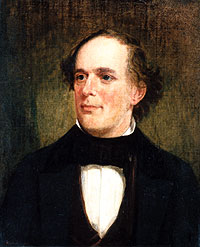
The proceedings in Wisconsin actually involved a number of cases and a number of decisions. The first of those decisions, In re Booth, 3 Wis. 1, 1854 WL 100 (1854), is by our friend, Associate Justice Abram D. Smith (pictured). It addresses a writ of habeas corpus that Sherman Booth filed after he was arrested but before he was indicted. To place the opinion in context, I must briefly describe what seems to have happened, in somewhat simplified form.

After Booth and others freed Glover on March 11, 1854, Booth was arrested on the basis of an order of Winfield Smith, "a commissioner duly appointed by the [federal] district court of the United States for said district [of Wisconsin]." In other words, Winfield Smith was not a state official or a federal judge, but rather an appointed federal "commissioner" under the
Fugitive Slave Act of 1850. As such, Section 1 of the Act gave him the powers of "arresting, imprisoning or bailing" "offenders for any crime or offense" under the Act.

To make a long story short, Booth was bailed, rearrested, rebailed and rearrested. Ultimately, on May 26, 1854, he was jailed to await indictment and trial.

Booth immediately petitioned the Wisconsin Supreme Court for a writ of habeas corpus. He argued that he should be freed for two reasons: first, the Fugitive Slave Act of 1850 was unconstitutional; and second, that the warrant that served as the basis for his arrest contained technical defects (such as the fact that it described Glover as "property" rather than using the statutory phrase "person held to service or labor").

Because the full court was not then in session, Associate Justice Smith heard the case alone on May 29 and 30, and issued his decision on June 7.

Before reaching the merits, Associate Justice Smith had to decide whether he even had jurisdiction to do so. Booth was in federal custody, but Smith was a state judge. Smith concluded that his exercise of jurisdiction would not impinge on the rights of the federal government because the warrant was issued by a commissioner and not by a federal judge. The commissioner was not independent and did not have true judicial powers:

"The warrant, by virtue of which the petitioner was held, was not issued by a federal judge or court, but by a commissioner of the United States. No exclusive or ultimate jurisdiction can be claimed for an officer of this kind. As one of the justices of the highest judicial tribunal of this state . . . I could not deny to any citizen or person entitled to the protection of the state, the proper process by which the validity of a warrant issued by such authority, could be examined. Nor can I admit, that a court commissioner, holding his appointment at the will of the court, responsible only to such court -- in fact, irresponsible and unimpeachable -- has the right or power to issue any process by which a citizen of the state may be imprisoned, that may not be examined, and its its validity tested, by the proper judicial authority of the state. . ..

" . . . [T]he States will never submit to the assumption, that United States commissioners have the power to hear and determine upon the rights and liberties of their citizens, and issue process to enforce their adjudications, which is beyond the examination or review of the state judiciary. . ..

"Every jot and tittle of power delegated to the federal government will be acquiesced in, but every jot and tittle of power reserved to the staes will be rigidly asserted, and as rigidly sustained."

Ableman v. Booth III: Abram D. Smith


Let's take a brief look at the first judge we're going to encounter. Abram D. Smith was born in 1811 in Lowville, New York. He became a lawyer and in 1842 moved to Milwaukee, Wisconsin, where he opened a practice.

When the Supreme Court of Wisconsin was reorganized in 1853, he was elected an Associate Justice. He served on the court until June 1859, when he was defeated. He was replaced, ironically enough, by Byron Paine, who had served as Sherman Booth's attorney in the various proceedings before the Wisconsin Supreme Court. He died in 1865.

A bit more about Associate Justice Smith may be found
here.
Related Posts with Thumbnails