Showing posts with label Salmon Portland Chase. Show all posts

Monday, January 17, 2011

Salmon P. Chase, Nullifier


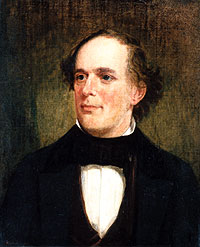
In his fine Fugitive Justice: Runaways, Rescuers, and Slavery on Trial, Steven Lubet describes Salmon Portland Chase's brush with nullification.

On Monday September 13, 1858, slave catchers seized a runaway slave by the name of John Price near Oberlin, Ohio and conducted him to the nearby town of Wellington, whence they planned to take a train to Columbus. Unbeknownst to them, Oberlin opponents of the Fugitive Slave Act of 1850 learned of the event and followed them. The slave catchers found themselves besieged in a Wellington hotel by a mixed-race crowd of 300 to 500 people demanding Price's release. In brief, members of the crowd stormed the hotel and transferred Price to a carriage. Price ultimately escaped to Canada.

On December 6, 1858, a federal grand jury in Cleveland indicted thirty-seven men for violation of the Fugitive Slave Act. Two of the defendants were tried and convicted in April and May 1859. A number of others were remanded to custody pending their trials.

In mid-May, however, the convicted defendants' attorneys filed a petition for habeas corpus with the Ohio Supreme Court, which scheduled argument for May 25, 1859.

Supporters of the defendants held a massive rally in Cleveland on May 24. By some estimates, as many as twelve thousand people attended. Although he had long been a leader in the anti-slavery movement, Governor Salmon P. Chase had not spoken out in connection with this or several previous incidents involving the Fugitive Slave Act and was not scheduled to attend. But perhaps because his earlier silences had been the subject of criticism he made an unexpected appearance.

Following other speakers who had vowed to resist the Fugitive Slave Act with force if necessary, Chase tried to walk a fine line between denouncing the law and advocating extra-legal measures. But in the end Chase "took a step toward the abyss":
If the process for the release of any prisoner should issue from Courts of the State [of Ohio], he was free to say that so long as Ohio was a Sovereign State, that process should be executed.
"'When the time came,' [Chase] said, 'and his duty was plain, he, as Governor of Ohio, would meet it as a man.'" In short, Chase had vowed to defy the federal government if necessary. "The Oberlin rescuers were still in jail and Governor Chase had all but promised to deploy the state militia on their behalf."

Luckily for Chase, the Ohio Supreme Court rescued him from his reckless commitment. By a 3 to 2 vote the Court denied the habeas petition. Although an abolitionist and a Republican, Chief Justice Joseph Rockwell Swan concluded that he was "bound by my official oath to sustain the supremacy of the constitution and the law:'THE PRISONER MUST BE REMANDED.'"

Thursday, January 21, 2010

Rud Hayes, Laff Riot


Two good quotes from Rutherford B. Hayes:

On Salmon P. Chase:
Chase possessed noble gifts of intellect, great culture, and a noble presence. When this is said, all that is favorable has been said. He was cold, selfish, and unscrupulous.

On predictions by supporters that, if he ran for and won the Ohio governorship in 1875, he could be the Republican presidential nominee in 1876:
How wild! What a queer lot we are becoming! Nobody is out of the reach of that mania.

Did you know, by the way, that Hayes's friends called him "Rud"?

Both quotes (and "Rud") are from Michael F. Holt's excellent (so far!) book, By One Vote: The Disputed Presidential Election of 1876.

About the illustration:
A crude but charming comic send-up of 1876 Republican campaign strategy. Democratic candidate Samuel J. Tilden and an unidentified man stand fishing on the left bank of a river, their basket overflowing with their catch. On the opposite bank stand Rutherford B. Hayes and Republican incumbent Ulysses S. Grant, obviously less successful. Grant advises Hayes, "I guess that reform bait won't work this side. Better try an anti-Catholic worm." Since both the Democratic and Republican platforms in 1876 stressed reform, Hayes's campaign sought to stir up anti-Catholic prejudice against Tilden.

Sunday, May 04, 2008

Salmon P. Chase, Bull-Bitch


I pass this along without comment, mostly because I'm not sure what a "bull-bitch" even is. It doesn't sound good, though:
The sincerity of [Chase's] hatred of slavery is beyond challenge. The Ohio Free Soil leader had committed himself to the antislavery movement in the 1830s when it was not respectable; he had braved anti-abolitionist mobs; he had waged a long legal struggle for black rights; and he had labored diligently for many years to form a powerful antislavery third party. As his commitment to political activity grew, however, so, too, did his ambition; he was, in the words of one Ohio politician, "as ambitious as Julius Caesar." Chase was . . . also unbearably self-righteous and on occasion decidedly duplicitous in his political dealings -- his enemies called him "a political vampire" and "a sort of moral bull-bitch."

William E. Gienapp, The Origins of the Republican Party, at 72.

Friday, January 26, 2007

Birney v. State I: Birney and Matilda

The literature suggests that Salmon P. Chase first became known as an antislavery advocate through his association with future Liberty Party presidential candidate James G. Birney (pictured) in the late 1830s. I therefore thought I’d take a look at the case in which Chase successfully represented Birney against a charge that he had unlawfully harbored a fugitive slave, Birney v. State, 8 Ohio 230, 1837 WL 40 (Ohio 1837). In this post, I’ll set the stage.

Birney, a prominent antislavery advocate, moved from Kentucky to Cincinnati, Ohio in 1835 because he had been unable to locate a printer in the former state. In January 1836, he began publishing an antislavery journal, The Philanthropist. His activities generated a lot of anger in Cincinnati as well: mobs there repeatedly destroyed his press.

In 1837, Birney was indicted in Hamilton County, Ohio for alleged violation of an 1804 state statute that made it a crime to harbor fugitive slaves:

“[I]f any person shall harbor or secrete any black or mulatto person, the property of another, the person so offending shall, on conviction thereof, be fined any sum not less than ten nor more than fifty dollars.”

The count of the indictment on which Birney was convicted following trial stated:

“That James G. Birney, on March 1, 1837, and for a long time, previous thereto, in the county aforesaid, did unlawfully harbor and secrete a certain mulatto girl by the name of Matilda, the said Matilda then being a slave and the property of one Larkin Lawrence, contrary to the form of the statute.”

For reasons I will discuss in another post, it is worth noting the circumstances under which Matilda apparently escaped. Larkin brought Matilda, “under his own charge, in a steamboat, to the Cincinnati landing, where she remained until she left it for the service of” Birney.


Saturday, January 13, 2007

Salmon Chase and The Fugitive Slave Clause

I don't know whether Abram Smith, Sherman Booth or Byron Paine ever met Salmon Portland Chase, but they had clearly absorbed Chase's arguments about the constitutionality of the Fugitive Slave Acts. You will recall that one of Associate Justice Smith's principal arguments was that the Fugitive Slave Clause did not delegate any power to Congress. The Clause was simply a compact between the States, unenforceable by Congress.

Well, this was exactly the argument that Chase had been making and popularizing since the late 1830s, as part of his thesis that the founders loathed slavery and provided in the Constitution that the federal government should have nothing to do with it:

"Chase . . . tried to interpret the [fugitive slave] clause almost out of existence. The section . . ., Chase pointed out, differed from other clauses in neglecting to delegate to Congress power to enforce it by appropriate legislation. Since all powers not delegated to the federal government were reserved to the states, Chase insisted that the clause was really a compact between the northern and southern states, and that 'each State must judge for itself as to the character of the compact, and the extent of the obligation created by it.' The laws of 1793 and 1850 involving the federal government in the capture of fugitives were unconstitutional, since Congress had no power on the subject."

Eric Foner, Free Soil, Free Labor, Free Men: The Ideology of the Republican Party Before the Civil War (Oxford Univ. Press 2d Ed. 1995) at 77.

Sound familiar?

This helps us understand, by the way, why many members of the Reconstruction Congress believed that it had the power to enforce the Thirteenth Amendment via civil rights legislation, even though that amendment contained no provision specifically delegating power to Congress to do so. It also helps explain why many members of the Reconstruction Congress believed that Section 1 of the Fourteenth Amendment was unnecessary. In Prigg v. Pennsylvania (1842), the Supremes had held -- contrary to Chase's arguments, that the Fugitive Slave Act of 1793 was constitutional: the Fugitive Slave Clause necessarily gave Congress, by implication, the power to enforce it. Members of the Reconstruction Congress reasoned or assumed that the Thirteenth Amendment similarly carried the necessary implication that Congress had the power it enforce it.

It was John Bingham of Ohio who drove his colleagues to include Section 1 in the Fourteenth Amendment because he was one of the few who understood that the implication of Barron v. Baltimore was that Congress did not have the power to enforce the provisions of the Bill of Rights against the States.
Related Posts with Thumbnails